Short answer: ChatGPT recommends the dental practices it can find and verify on the open web. To be one of them, let OpenAI's search crawler reach your site, keep your practice details identical everywhere, build recent reviews on Yelp as well as Google, and give every service its own clear, answer-first page. The 10-point checklist below covers each step in order.
Patients are already asking. In BrightLocal's 2026 research, the share of consumers using AI to find local business recommendations climbed from 6% in 2025 to 45%, and ChatGPT was the most used tool, at 31%. When a patient types "best family dentist near me that takes Delta Dental," ChatGPT usually names two or three practices. If yours isn't one of them, you never see that patient, and nothing in your analytics tells you they were lost.
Most guides on this topic stop at "be consistent and get reviews." That advice is right but incomplete. This one explains where ChatGPT actually gets its information about a dental practice, including the Yelp data deal that changed local answers in July 2026, then gives you a checklist, a 15-minute way to test your practice, and the HIPAA mistake to avoid when you reply to reviews. For the bigger picture on search for dental practices, see our page on SEO for dentists.
How does ChatGPT choose which dentists to recommend?
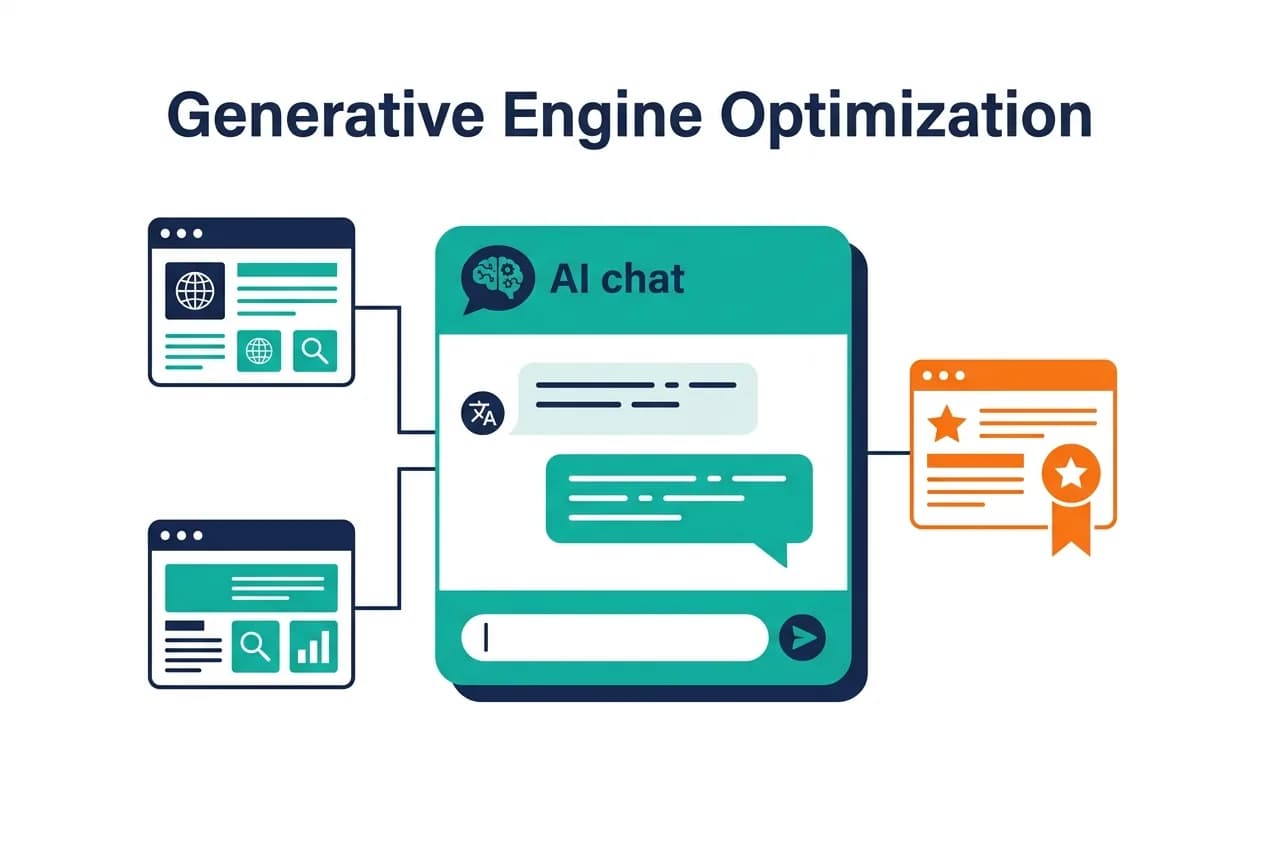
ChatGPT chooses dentists by searching the web when a patient asks a local question, then naming the practices that several trusted sources describe consistently and that match the details of the request, such as the treatment, neighborhood, insurance or opening hours. It draws on its own search index, results from other search engines, and licensed data such as Yelp reviews. OpenAI hasn't published an exact ranking formula.
It helps to know the two ways ChatGPT can answer, because they reward different things.
From memory. For general questions, ChatGPT can answer from what it learned in training. That knowledge is months old and patchy for small local businesses, so it's a poor source for "which dentist should I see this week."
From live search. For local, time-sensitive questions like "emergency dentist open Saturday in Plano," ChatGPT usually searches the web first. This is where your practice can win, and it pulls from three kinds of source:
- OpenAI's own search index. It's built by a crawler called OAI-SearchBot. OpenAI's crawler documentation states that "sites that are opted out of OAI-SearchBot will not be shown in ChatGPT search answers."
- Other search engines' results. OpenAI doesn't publish which providers it uses. Bing was long assumed to be the source, but a Backlinko test reported by Search Engine Land found ChatGPT Plus answering from a page that only Google could crawl. The safe conclusion: be properly indexed in both Google and Bing.
- Licensed data partners. Since July 2026, Yelp has licensed its reviews, ratings, photos and business information to OpenAI, and ChatGPT can show that content, with Yelp branding and links, in local answers (Search Engine Land).
From those sources, ChatGPT tends to name practices that clear two bars. First, it can confirm the basics: the practice exists, where it is, when it's open and what it treats, with the same facts in several places. Second, it can match the patient's specific need. A patient asking for "a gentle dentist for an anxious 6-year-old who takes Cigna" gets practices whose website, reviews or listings say those things in plain words. If you offer sedation but never write that down, ChatGPT can't recommend you for it.
This is also why ranking first on Google Maps doesn't guarantee a ChatGPT mention, and why a practice with fewer reviews but clearer, more consistent information sometimes beats a bigger competitor.
What ChatGPT actually reads about your practice
ChatGPT builds its picture of your practice from seven kinds of source, and each one answers a different question a patient might ask. The table lists them roughly in order of how directly they feed a ChatGPT answer, based on what OpenAI, Yelp and independent tests have confirmed.
| Source | What ChatGPT looks for there | How it reaches ChatGPT |
|---|---|---|
| Your website | Services you offer, location and areas served, dentists' names and credentials, hours, insurance accepted, whether you take new patients | Crawled by OpenAI's OAI-SearchBot and by search engines whose results ChatGPT uses |
| Yelp | Star rating, how many reviews and how recent, review wording, photos, category, hours | Licensed directly to OpenAI since July 2026 |
| Health and insurance directories (Healthgrades, Zocdoc, the ADA's Find-a-Dentist, insurers' provider lists) | Credentials, specialties, insurance networks, new-patient status | Appear in web search results ChatGPT reads |
| Google Business Profile | Name, address, phone, hours, categories, services | Mostly indirect: it shapes Google's own results, which ChatGPT may draw on. BrightLocal's CEO says AI search tools "can't see inside Google's walled garden of reviews" |
| Apple Maps and Bing Places | The same core facts, as a consistency check | Yelp has historically supplied Apple Maps reviews in the US; Bing powers Microsoft Copilot and is one of the indexes AI tools may draw on |
| Local press, "best dentist in [city]" lists, community sites, Reddit threads | Independent mentions that you're real, active and well regarded | Appear in web search results ChatGPT reads |
Structured data on your site (Dentist schema) | Machine-readable name, address, hours, services, providers | Read along with your page when it's crawled |
Two practical takeaways come out of this table. First, your website is the only source you fully control, so it has to state every important fact in plain words. Second, reviews on Google alone aren't enough for ChatGPT. Google reviews still matter enormously for Google Maps and Google's own AI answers, but for ChatGPT specifically, Yelp and other open-web review sources now carry direct weight.
Step-by-step checklist: 10 ways to get recommended by ChatGPT
Work through these ten steps in order; the early ones fix problems that make the later ones pointless. Most practices can finish steps 1 to 5 in a week with the front-desk team and an hour of a web developer's time. Steps 6 to 10 are ongoing.
Google Business Profile (and the other map listings)
1. Complete and correct your Google Business Profile. Set the most specific primary category ("Dentist," or your specialty such as "Pediatric dentist" or "Orthodontist"), add every service you offer, fill in hours including holiday hours, add your booking link and upload real photos of the office and team. Even though ChatGPT doesn't read your Google reviews directly, this profile is the most copied record of your practice online, and Google's own AI answers lean on it heavily. Our local SEO service covers this setup in detail.
2. Claim Yelp, Apple Business Connect and Bing Places, and match them to your Google profile. Yelp matters most for ChatGPT right now because of its data licensing deal with OpenAI. Choose the correct dental category, correct the hours, address and phone number, list your services, and replace stock images with real photos. Apple Business Connect controls your Apple Maps listing, and Bing Places controls Bing and Copilot. All four should say exactly the same thing.
Reviews
3. Build a steady flow of recent reviews, following each platform's rules. Recency matters as much as volume: in BrightLocal's 2026 survey, 74% of consumers only consider reviews from the last three months. On Google, you're allowed to ask every patient for a review, as long as you don't offer anything in return and don't selectively ask only happy patients. Yelp is different: its guidelines tell businesses "Don't ask anyone to review your business", and its software may not recommend reviews that seem to be prompted by the business. On Yelp, make yourself easy to find instead: display a "Find us on Yelp" sign and link to your page from your website.
4. Reply to reviews without revealing anything about the patient. This is where dental practices get into real trouble. The HHS Office for Civil Rights fined Elite Dental Associates in Dallas $10,000 in 2019, and New Vision Dental in California $23,000 in 2022, for disclosing patients' details, including names, treatment and insurance information, in Yelp replies. Never confirm that the reviewer is a patient, never mention a treatment or visit, and move disputes offline: "Thank you for your feedback. We'd welcome the chance to talk; please call our office manager at [number]." Replies still help, because they show patients and AI tools an active, responsive practice.
Directory consistency
5. Pick one official version of every fact and fix it everywhere. Write down the exact practice name, address format, main phone number, hours and each dentist's name as you want them to appear. Then update every listing to match: Healthgrades, Zocdoc, the ADA's Find-a-Dentist, Vitals, your insurers' provider directories, Facebook and any old listings from a previous address or owner. When one source says you close at 5 and another says 6, an AI tool either has to guess or leaves you out.
6. Make sure ChatGPT and search engines can actually read your website. Ask your web developer to confirm three things:
- Your robots.txt file doesn't block OAI-SearchBot, the crawler that decides whether you can appear in ChatGPT search. OpenAI notes that changes take about 24 hours to apply. Blocking GPTBot (used for training) is a separate choice and doesn't affect search.
- Your firewall, security plugin or Cloudflare bot settings aren't silently blocking AI crawlers.
- Your site is verified in both Google Search Console and Bing Webmaster Tools, with a current sitemap submitted to each.
Service pages
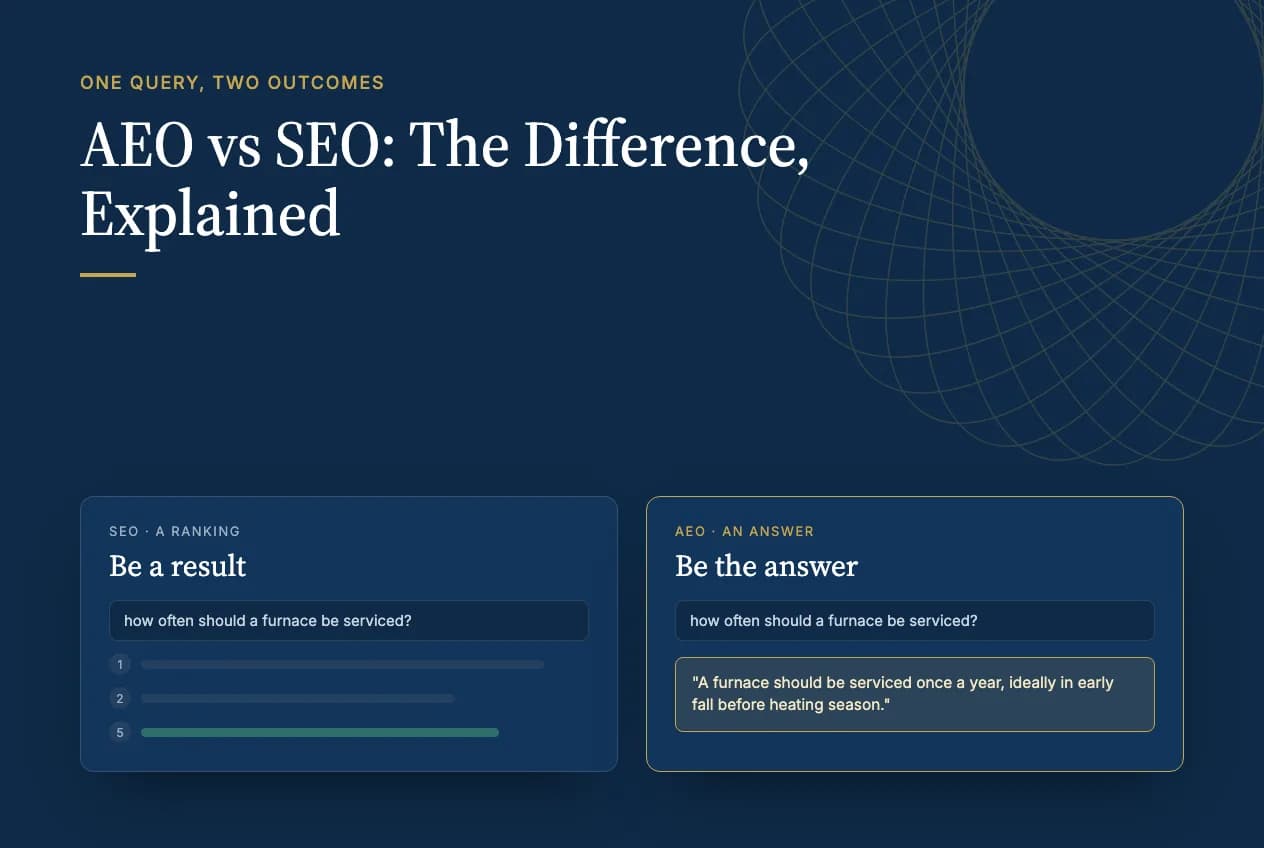
7. Give every service its own page, and answer the main question in the first two sentences. One page each for implants, Invisalign, emergency care, sedation, pediatric dentistry, whitening and so on, named the way patients search. Open each page with a direct answer, then the facts a patient filters on: who it's for, what the first visit involves, rough cost or financing options, insurance, and how to book. "Dr. Patel has placed implants since 2012 and offers same-week consultations" is quotable. "We provide comprehensive, personalized care" is not. Our guide to AEO vs SEO shows how answer-first writing works on one real query.
8. Add Dentist schema that matches what the page says. Schema.org has a specific Dentist type. Use it on your homepage or contact page with your exact name, address, phone, hours, geo-coordinates and links to your Google, Yelp and social profiles, and add a Person entry for each dentist with their credentials. Every value must match your visible page and your listings; mismatched schema is worse than none.
FAQ content
9. Turn the questions your front desk hears into answers on your site. Ask your team to keep a list for two weeks: "Do you take Delta Dental?" "Can you see my child the same day?" "Do you offer nitrous for anxious patients?" Answer each one on the relevant service page in 40 to 60 words, in the patient's own wording. These are the exact questions patients now ask ChatGPT.
10. Publish the practical facts AI tools can't guess. ChatGPT won't assume anything you haven't written down. State plainly which insurance plans you accept, whether you're taking new patients, emergency availability, languages spoken, wheelchair access, parking, payment plans and the neighborhoods you serve. Update these whenever they change, and change them everywhere at once.
Want a second pair of eyes on these ten steps for your practice? That's the work behind our dental practice SEO service.
How to check if ChatGPT recommends you today
You can check whether ChatGPT recommends your practice in about 15 minutes: open a temporary chat, ask the six questions below the way a patient would, and write down who gets named and which sources are cited. Repeat the same test once a month so you can see whether your changes are working.
Set up the test so the results are honest.
- Use a temporary chat or a logged-out browser window, so your own history doesn't nudge the answer toward your practice.
- Make sure web search is on. If ChatGPT answers without searching, add "search the web" to the prompt.
- Ask from your real location, or name the neighborhood or ZIP code in the question.
Ask these six questions, swapping in your city, services and practice name:
- "Who is the best family dentist in [city]?"
- "I chipped a tooth. Is there an emergency dentist open today near [neighborhood]?"
- "Which dentist in [city] is good with nervous or anxious patients?"
- "Best dentist for dental implants in [city] that takes [insurance]?"
- "Is [practice name] in [city] a good dentist?"
- "What services does [practice name] offer, and what are their hours?"
Questions 1 to 4 tell you whether you're recommended. Questions 5 and 6 tell you whether ChatGPT has your facts right.
Write down four things for each answer:
| What to record | Why it matters |
|---|---|
| Were you named, and in what position? | Your baseline, so you can see change month to month |
| Which practices were named instead? | These are the competitors ChatGPT already trusts in your area; study their listings and pages |
| Which sources did it cite or link? | Your to-do list: if it keeps citing a directory or "best dentists" article you're missing from, get on it |
| Were your details correct? | Wrong hours, an old address or a retired dentist's name point to an outdated listing you need to fix |
Watch for Yelp cards or links in the answers. If they appear for your queries, the Yelp data feed is active in your market, and your Yelp page is doing real work.
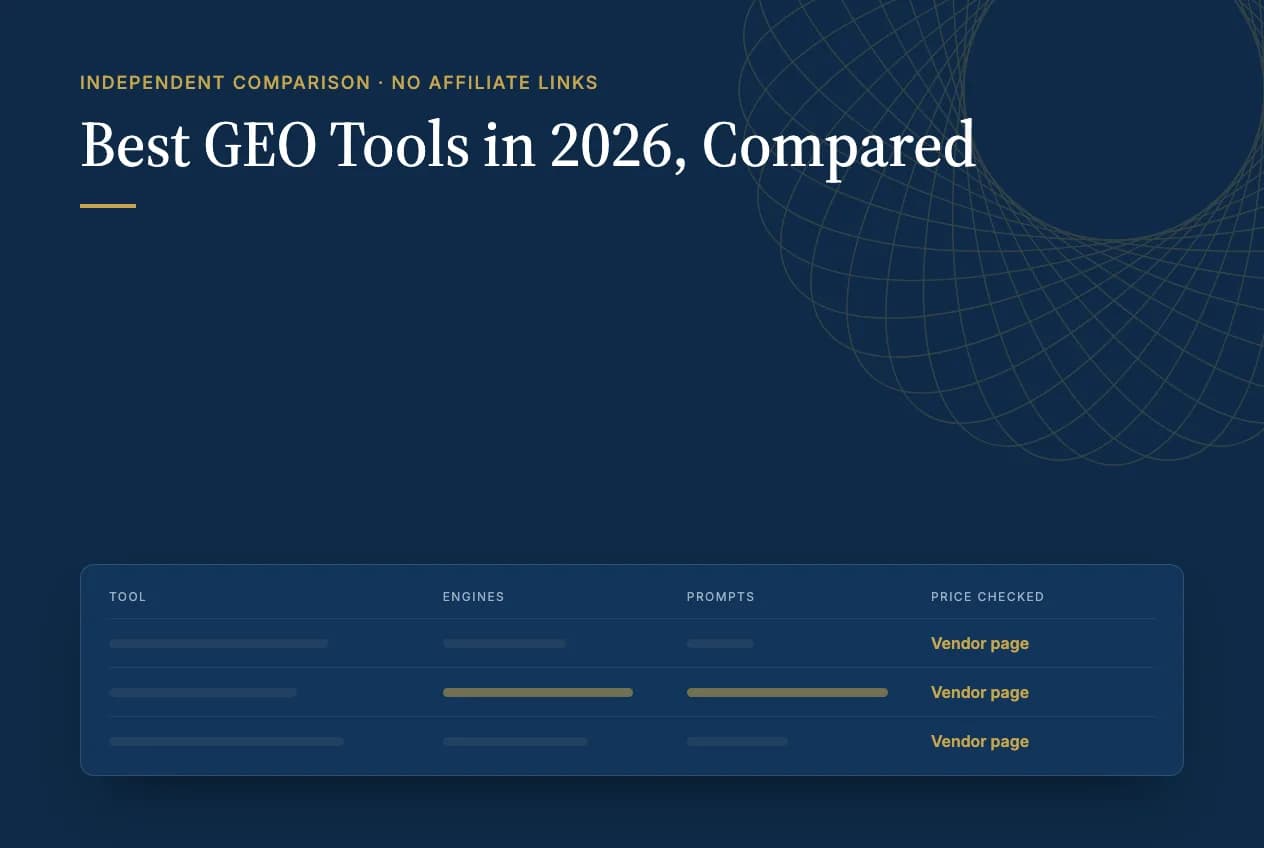
One caution: ChatGPT's answers change from one run to the next. A single missing mention isn't a crisis, and a single appearance isn't a win. Ask each question two or three times and look at the pattern over several months. If you'd rather automate this, our comparison of the best GEO tools covers the trackers that run these checks daily.
Common reasons a practice never shows up
When a good practice never appears in ChatGPT, the cause is usually one of a handful of fixable problems, not a lack of quality. These are the ones we see most, roughly from quickest to slowest to fix.
| Reason | How to spot it | The fix |
|---|---|---|
| The website blocks OpenAI's crawler | Your robots.txt disallows OAI-SearchBot, or a security tool blocks unknown bots | Allow OAI-SearchBot and check firewall settings (step 6) |
| The site isn't indexed in Bing | Your practice doesn't appear in a site: search on Bing | Verify in Bing Webmaster Tools and submit your sitemap |
| Key facts live in images or PDFs | Hours, insurance lists or services appear only in a graphic, a menu image or a downloadable PDF | Put them in plain text on the page |
| Your details disagree across the web | ChatGPT gives an old address, wrong hours or a former dentist's name | Fix every listing to one official version (step 5) |
| The service you want to be known for isn't named | You offer sedation or same-day crowns, but no page says so | One clear page per service (step 7) |
| Yelp is unclaimed or empty | A few old reviews, stock photos, wrong category | Claim and complete the page (step 2) |
| All your reviews are on Google | Strong Google rating, little anywhere else | Build presence on Yelp and health directories, following each site's rules (step 3) |
| Your name is easy to confuse | Another "Smile Dental" exists nearby or in a city with the same name | Use your full name and city consistently, and add schema with your exact address |
| Nobody else mentions you | No local press, "best of" lists or community listings | Sponsor local events, join the chamber of commerce, and make sure local list writers know you exist |
If you fix the first five and still don't show up after two or three months, the gap is usually independent mentions: competitors who appear in local articles, best-of lists and directories that ChatGPT keeps citing. That takes longer, but it's also the advantage that's hardest for the next practice to copy.
Sources
Checked October 20, 2026.
- OpenAI: Overview of OpenAI crawlers
- Search Engine Land: ChatGPT gains access to Yelp reviews, ratings and photos (July 2026)
- Search Engine Land: ChatGPT is using Google Search (Backlinko test)
- BrightLocal: Consumers' trust in AI for local recommendations (March 2026)
- BrightLocal: Local Consumer Review Survey 2026
- Yelp: Don't ask for reviews
- Google: Maps user contributed content policy
- DrBicuspid: Dental practice pays $10K for putting patient info on Yelp (October 2019)
- HIPAA Journal: OCR fines California dental practice for PHI disclosures on Yelp (December 2022)
- 9to5Mac: Apple Maps reviews and photos from Yelp (July 2024)
- OpenAI: Ads in ChatGPT
- Schema.org: Dentist
Frequently asked questions
Does ChatGPT use my Google reviews?
Not directly, as far as anyone has confirmed. BrightLocal's CEO says AI search tools can't see inside Google's review system, though Google reviews may still surface indirectly through search results. Yelp reviews are different: since July 2026, Yelp licenses its reviews, ratings and photos to OpenAI, so a strong Yelp profile now feeds ChatGPT directly.
Does my Google ranking matter for ChatGPT?
Yes, but it isn't the whole story. A Backlinko test reported by Search Engine Land found ChatGPT Plus answering from a page only Google could crawl, so being visible in Google helps. ChatGPT also uses its own index and licensed data like Yelp, and it favors practices whose facts match across sources.
Can I pay to have ChatGPT recommend my practice?
No. You can't buy a place in ChatGPT's regular answers. OpenAI says ads in ChatGPT are labeled, run on separate systems and don't influence its answers. The way to be recommended is to improve the sources it reads: your website, Yelp and other listings, reviews, and mentions on local and health sites.
Is it safe to reply to patient reviews?
Yes, if you never reveal anything about the patient. Don't confirm they're a patient, don't mention treatment, visits, insurance or costs, and move disputes to a phone call. HHS fined dental practices $10,000 in 2019 and $23,000 in 2022 for disclosing patient details in Yelp replies. A short, polite, general reply is safe.
What should I do if ChatGPT says something wrong about my practice?
Find and fix the source of the error. Ask ChatGPT where the information came from, then correct that listing, directory or page, and update your website and your Google, Yelp, Apple and Bing listings to match. You can also flag the answer with the thumbs-down button. Corrections show up once the sources are recrawled.
How long does it take to start appearing in ChatGPT?
Technical fixes work fastest: OpenAI says robots.txt changes for its search crawler take about 24 hours to apply. Listing corrections usually take a few weeks to spread, and building reviews and local mentions takes months. Most practices should expect a clear difference within two to three months, depending on local competition.
Should I block GPTBot?
That's a separate decision from search. GPTBot collects content that may be used to train OpenAI's models; blocking it doesn't remove you from ChatGPT search. OAI-SearchBot is the crawler that matters for being recommended, and it should be allowed. Many practices allow OAI-SearchBot and choose either way on GPTBot.
Does this also work for Google AI Mode, Gemini and Perplexity?
Mostly, yes. Consistent facts, clear service pages, real reviews and independent mentions help every AI tool. The main difference is emphasis: Google's AI answers lean more on your Google Business Profile and Google reviews, while ChatGPT now leans more on Yelp. Covering both is the safest approach.
Do I need an agency to do this?
Not necessarily. Steps 1 to 5 can be done by an organized office manager, and step 6 needs about an hour from your web developer. An agency helps most with service pages, schema and earning local mentions, or if you run several locations and need the same facts kept consistent everywhere.